
Winning the Italian Championship.... priceless!
A great video.
Showing posts with label Slot It. Show all posts
Showing posts with label Slot It. Show all posts
Thursday, June 16, 2011

Friday, June 10, 2011
New Slot It McLaren GTR


CA10e McLaren F1 GTR n.40, Le Mans 1998.
Drivers: B.Auberlen, S.O'Rourke, T.Sugden
The McLaren F1 GTR production, directed by the former Formula 1 engineer Gordon Murray, began in 1992 and ended in 1998.
At that time, it was the fastest car ever built.
In 1995, the F1 GTR gave its first performance at Le Mans and won, bringing to the finish line five cars that ended 1^st, 3^rd, 4^th, 5^th and 13^th.
The car featured a monocoque carbon-fibre chassis and a BMW 5990 cc V12 engine.
In 1997, the F1 GTR was developed into the “Long Tail” version.
At Le Mans 1998, the McLaren n.40 finished in 4^th place, completing a very regular race, with only 40 minutes spent at the pits in the entire 24-hours time.
New Slot It McLaren GTR
CA10e McLaren F1 GTR n.40, Le Mans 1998.
Drivers: B.Auberlen, S.O'Rourke, T.Sugden
The McLaren F1 GTR production, directed by the former Formula 1 engineer Gordon Murray, began in 1992 and ended in 1998.
At that time, it was the fastest car ever built.
In 1995, the F1 GTR gave its first performance at Le Mans and won, bringing to the finish line five cars that ended 1^st, 3^rd, 4^th, 5^th and 13^th.
The car featured a monocoque carbon-fibre chassis and a BMW 5990 cc V12 engine.
In 1997, the F1 GTR was developed into the “Long Tail” version.
At Le Mans 1998, the McLaren n.40 finished in 4^th place, completing a very regular race, with only 40 minutes spent at the pits in the entire 24-hours time.
Gulf Slot It Ford GT40 MKI


CW09 Ford Gt 40 MKI: Le Mans Winner 1969
Drivers: Jacky Ickx, Jackie Oliver
The Ford GT40 was one of the most successful car who won four times the 24 hours of Le Mans in 1966 being the Mk II, 1967 the Mk IV, and 1968-1969 the oldest chassis design, the Mk I.
This is the first car in Le Mans history to win the race more than once with the same chassis; it was built to compete against Ferrari (who had won at Le Mans six times in a row from 1960 to 1965).
The Mk I chassis n. 1075 was a steel and aluminum semi-monocoque; body was reinforced with carbon fiber. It had brakes ventilated discs. The engine, originally a 4.7 liter, had been enlarged to 4.9-liter with the special alloy Gurney-Weslake cylinder head; the gearbox was a ZF 5 gears.
The MKI was later upgraded to Mk II specifications with a 7.0 liter (427ci) engine.
The GT 40 will become the most glorious of all Ford Racing; in '69 the car caught the victory at Sebring.
Gulf Slot It Ford GT40 MKI
CW09 Ford Gt 40 MKI: Le Mans Winner 1969
Drivers: Jacky Ickx, Jackie Oliver
The Ford GT40 was one of the most successful car who won four times the 24 hours of Le Mans in 1966 being the Mk II, 1967 the Mk IV, and 1968-1969 the oldest chassis design, the Mk I.
This is the first car in Le Mans history to win the race more than once with the same chassis; it was built to compete against Ferrari (who had won at Le Mans six times in a row from 1960 to 1965).
The Mk I chassis n. 1075 was a steel and aluminum semi-monocoque; body was reinforced with carbon fiber. It had brakes ventilated discs. The engine, originally a 4.7 liter, had been enlarged to 4.9-liter with the special alloy Gurney-Weslake cylinder head; the gearbox was a ZF 5 gears.
The MKI was later upgraded to Mk II specifications with a 7.0 liter (427ci) engine.
The GT 40 will become the most glorious of all Ford Racing; in '69 the car caught the victory at Sebring.
Friday, May 6, 2011
New Slot It axles
 New Slot.it product
Nuevo producto Slot.it
Nuovo prodotto Slot.it
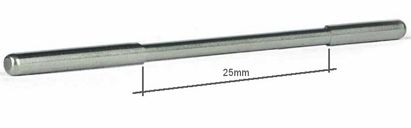
PA01-54R - Axle 3/32" x54mm, rectified (2x)
PA01-48R - Axle 3/32" x48mm, rectified (2x)
Gli assali PA48R / PA54R a centro ridotto sono studiati per i supporti motore Slot.it con motore SW che abbiano problemi di interferenza fra motore e albero in caso di motori simili ma di dimensioni lievemente maggiori. La zona ristretta ha una lunghezza di 25mm e le parti laterali sono di 9.5(12.5) e 13.5(16.5) mm.
The 'narrow centre' PA48R, and PA54R axles, have been designed for the Slot.it SW motor mounts in conjunction with motors from manufacturers other than Slot.it, which may show some interference with the axle due to the different thickness of the metal case. The narrow part is 25mm long and the sides are 9.5(12.5) e 13.5(16.5) mm.
Los ejes PA48R / PA54R con zona central reducida están diseñados para los soportes motor Slot.it SW, en caso que haya interferencia entre el motor y el eje untilizando motores de tamaño similar pero un poco más grandes. La zona restringida tiene una longitud de 25 mm y los lados son 9.5 (12.5) y 13.5 (16.5) mm.
New Slot It axles
New Slot.it productNuevo producto Slot.it
Nuovo prodotto Slot.it
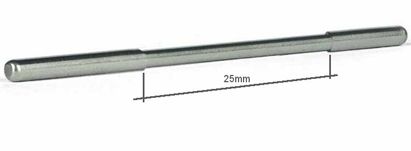
PA01-54R - Axle 3/32" x54mm, rectified (2x)
PA01-48R - Axle 3/32" x48mm, rectified (2x)
Gli assali PA48R / PA54R a centro ridotto sono studiati per i supporti motore Slot.it con motore SW che abbiano problemi di interferenza fra motore e albero in caso di motori simili ma di dimensioni lievemente maggiori. La zona ristretta ha una lunghezza di 25mm e le parti laterali sono di 9.5(12.5) e 13.5(16.5) mm.
The 'narrow centre' PA48R, and PA54R axles, have been designed for the Slot.it SW motor mounts in conjunction with motors from manufacturers other than Slot.it, which may show some interference with the axle due to the different thickness of the metal case. The narrow part is 25mm long and the sides are 9.5(12.5) e 13.5(16.5) mm.
Los ejes PA48R / PA54R con zona central reducida están diseñados para los soportes motor Slot.it SW, en caso que haya interferencia entre el motor y el eje untilizando motores de tamaño similar pero un poco más grandes. La zona restringida tiene una longitud de 25 mm y los lados son 9.5 (12.5) y 13.5 (16.5) mm.
Tuesday, March 22, 2011
Slot It Endurance Race Video
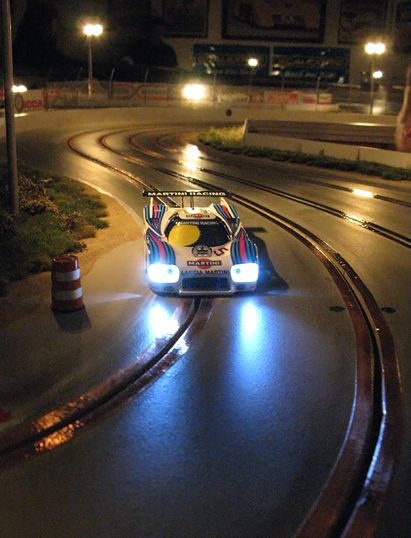
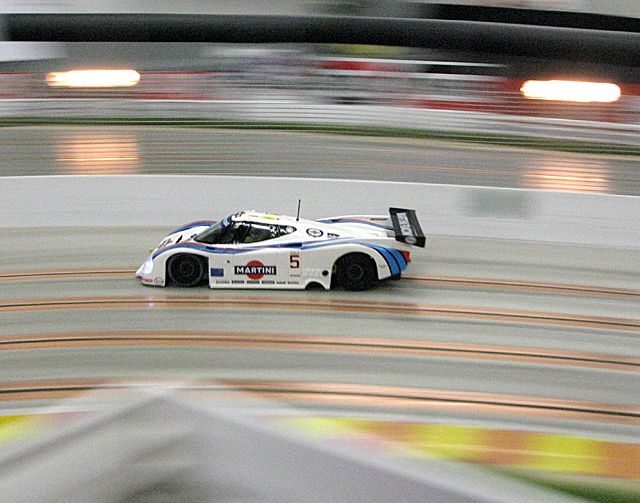
5 teams, 20 minutes a heat... and half in the dark, yeah we had a great time last weekend at the slot club I belong to.



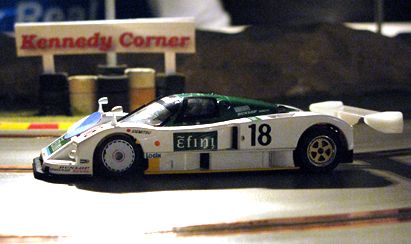
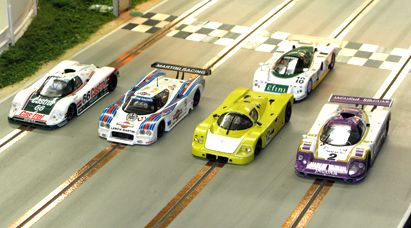
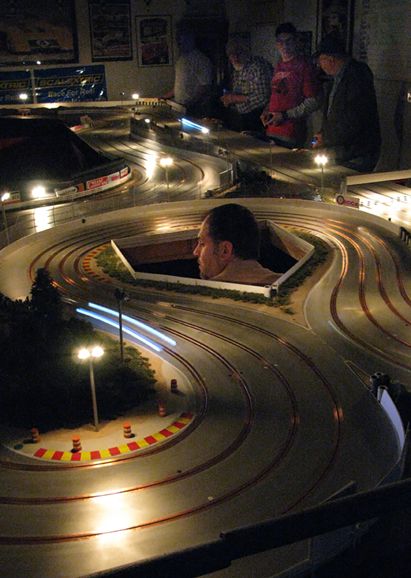
Slot It Endurance Race Video
5 teams, 20 minutes a heat... and half in the dark, yeah we had a great time last weekend at the slot club I belong to.
Tuesday, March 15, 2011
New Slot It GT40
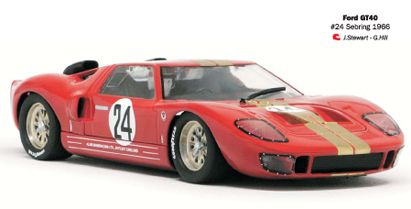 From Slot It:
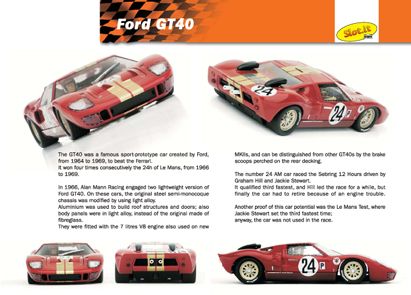
CA18a, Ford GT40 - #24 Sebring 1966
Drivers: G.Hill, J.Stewart
The GT40 was a famous sport-prototype car created by Ford, from 1964 to 1969, to beat the Ferrari. It won four times consecutively the 24h of Le Mans, from 1966 to 1969.
In 1966, Alan Mann Racing engaged two lightweight version of Ford GT40. On these cars, the original steel semi-monocoque chassis was modified by using light alloy. Aluminium was used to build roof structures and doors; also body panels were in light alloy, instead of the original made of fibreglass. They were fitted with the 7 litres V8 engine also used on new MKIIs, and can be distinguished from other GT40s by the brake scoops perched on the rear decking.
The number 24 AM car raced the Sebring 12 Hours driven by Graham Hill and Jackie Stewart. It qualified third fastest, and Hill led the race for a while, but finally the car had to retire because of an engine trouble.
Another proof of this car potential was the Le Mans Test, where Jackie Stewart set the third fastest time; anyway, the car was not used in the race

New Slot It GT40
From Slot It:CA18a, Ford GT40 - #24 Sebring 1966
Drivers: G.Hill, J.Stewart
The GT40 was a famous sport-prototype car created by Ford, from 1964 to 1969, to beat the Ferrari. It won four times consecutively the 24h of Le Mans, from 1966 to 1969.
In 1966, Alan Mann Racing engaged two lightweight version of Ford GT40. On these cars, the original steel semi-monocoque chassis was modified by using light alloy. Aluminium was used to build roof structures and doors; also body panels were in light alloy, instead of the original made of fibreglass. They were fitted with the 7 litres V8 engine also used on new MKIIs, and can be distinguished from other GT40s by the brake scoops perched on the rear decking.
The number 24 AM car raced the Sebring 12 Hours driven by Graham Hill and Jackie Stewart. It qualified third fastest, and Hill led the race for a while, but finally the car had to retire because of an engine trouble.
Another proof of this car potential was the Le Mans Test, where Jackie Stewart set the third fastest time; anyway, the car was not used in the race
Sunday, January 30, 2011


Friday, January 28, 2011


Friday, January 14, 2011


Thursday, December 16, 2010
New Slot It Chaparral 2E
CW08, Chaparral 2E #65 1st, #66 2nd Laguna Seca Can-Am 1966
Drivers: Phil Hill - Jim Hall


Drivers: Phil Hill - Jim Hall


New Slot It Chaparral 2E
CW08, Chaparral 2E #65 1st, #66 2nd Laguna Seca Can-Am 1966
Drivers: Phil Hill - Jim Hall
Drivers: Phil Hill - Jim Hall
Subscribe to:
Posts (Atom)


